Westerly Creek Wetlands
© 2025
Edition of unique artists book
Dimensions in inches (closed): 6.5 x 8.5 x 2
Materials
Book: paper, ink, thread, laser toner, fusion foil, leather, foil
Box: book board, leather, paper, polymer, gold leaf, acrylic, thread, brass
Eight rigid panels (including covers) in a modified keystone shape, side sewn with a stab stitch variation, with original screen printed imagery by Robyn L. Stein and an essay by Alicia with both observations of and the recent history/re-development of a neighborhood wetlands area.
Housed in a custom drop-spine box; the tray shaped to hold the keystone shape book. The box, covered in goat, has extensive painting and embroidery on both front and back cover. The tray walls are covered in two tones of leather; the paste down and tray covering are of surface manipulated paper.
Full text:
For many years I’ve lived steps away from the restored banks of Westerly Creek - a collaboration of engineers and ecologists. I’ve spent hours wandering this constructed marsh, watching Red-winged Blackbirds chirp and sway on tall cattails and Great Blue Herons stalk the shallows, Gadwells dabble in the pond, rabbits and coyotes moving through at dusk. Even deer for a time, but they have wandered elsewhere. But for half my life, this same tract of land was an air force base, a place of runways and hangars, a landscape devoted entirely to the austere functionality of national defense.
When Lowry Air Force Base closed in 1994, Denver chose to repurpose the land for a wetland born of engineering reports and environmental impact statements, designed to manage 100-year flood events — to transform potential catastrophe into cattail habitat,
urban runoff into sanctuary. A utilitarian dream of clean water meeting a dream of wildness in the midst of urban sprawl.
What a thing, to have destroyed natural wetlands in favor of national defense, then spend decades and millions of dollars constructing wetlands in nearly the same place. Redemption
through technology?
In the spirit of that peculiarly Western form of optimism, we seem to believe that by creating space for other species in the heart of our urban sprawl, we can engineer our way back to grace.
The birds who nest here and the small creatures that thrive in Great Lawn Park do not read engineering reports or contemplate the irony of a restored creek corridor that must function as an integral part of a stormwater system for flood detention, conveyance, and water quality treatment. They have claimed these constructed shallows as they would ancient habitat, trusting the way water finds its own level regardless of human intention.
I’m glad for this park, for this natural space that is the product of human choice and design — a near-daily reminder that I am not separate from nature but embedded within it, responsible for both its degradation and its restoration.
Designed and crafted in a studio perched on the traditional lands
of the Arapahoe, Cheyenne,
Ute and Oglala Sioux. Thanks to
Robyn L. Stein for the gift of
& permission to use her
stunning screenprint.
Word ladder (on the back side):
assault
asphalt
results
consult
wetlands
Westerly Creek Wetlands
© 2025
Edition of unique artists book
Dimensions in inches (closed): 6.5 x 8.5 x 2
Materials
Book: paper, ink, thread, laser toner, fusion foil, leather, foil
Box: book board, leather, paper, polymer, gold leaf, acrylic, thread, brass
Eight rigid panels (including covers) in a modified keystone shape, side sewn with a stab stitch variation, with original screen printed imagery by Robyn L. Stein and an essay by Alicia with both observations of and the recent history/re-development of a neighborhood wetlands area.
Housed in a custom drop-spine box; the tray shaped to hold the keystone shape book. The box, covered in goat, has extensive painting and embroidery on both front and back cover. The tray walls are covered in two tones of leather; the paste down and tray covering are of surface manipulated paper.
Full text:
For many years I’ve lived steps away from the restored banks of Westerly Creek - a collaboration of engineers and ecologists. I’ve spent hours wandering this constructed marsh, watching Red-winged Blackbirds chirp and sway on tall cattails and Great Blue Herons stalk the shallows, Gadwells dabble in the pond, rabbits and coyotes moving through at dusk. Even deer for a time, but they have wandered elsewhere. But for half my life, this same tract of land was an air force base, a place of runways and hangars, a landscape devoted entirely to the austere functionality of national defense.
When Lowry Air Force Base closed in 1994, Denver chose to repurpose the land for a wetland born of engineering reports and environmental impact statements, designed to manage 100-year flood events — to transform potential catastrophe into cattail habitat,
urban runoff into sanctuary. A utilitarian dream of clean water meeting a dream of wildness in the midst of urban sprawl.
What a thing, to have destroyed natural wetlands in favor of national defense, then spend decades and millions of dollars constructing wetlands in nearly the same place. Redemption
through technology?
In the spirit of that peculiarly Western form of optimism, we seem to believe that by creating space for other species in the heart of our urban sprawl, we can engineer our way back to grace.
The birds who nest here and the small creatures that thrive in Great Lawn Park do not read engineering reports or contemplate the irony of a restored creek corridor that must function as an integral part of a stormwater system for flood detention, conveyance, and water quality treatment. They have claimed these constructed shallows as they would ancient habitat, trusting the way water finds its own level regardless of human intention.
I’m glad for this park, for this natural space that is the product of human choice and design — a near-daily reminder that I am not separate from nature but embedded within it, responsible for both its degradation and its restoration.
Designed and crafted in a studio perched on the traditional lands
of the Arapahoe, Cheyenne,
Ute and Oglala Sioux. Thanks to
Robyn L. Stein for the gift of
& permission to use her
stunning screenprint.
Word ladder (on the back side):
assault
asphalt
results
consult
wetlands
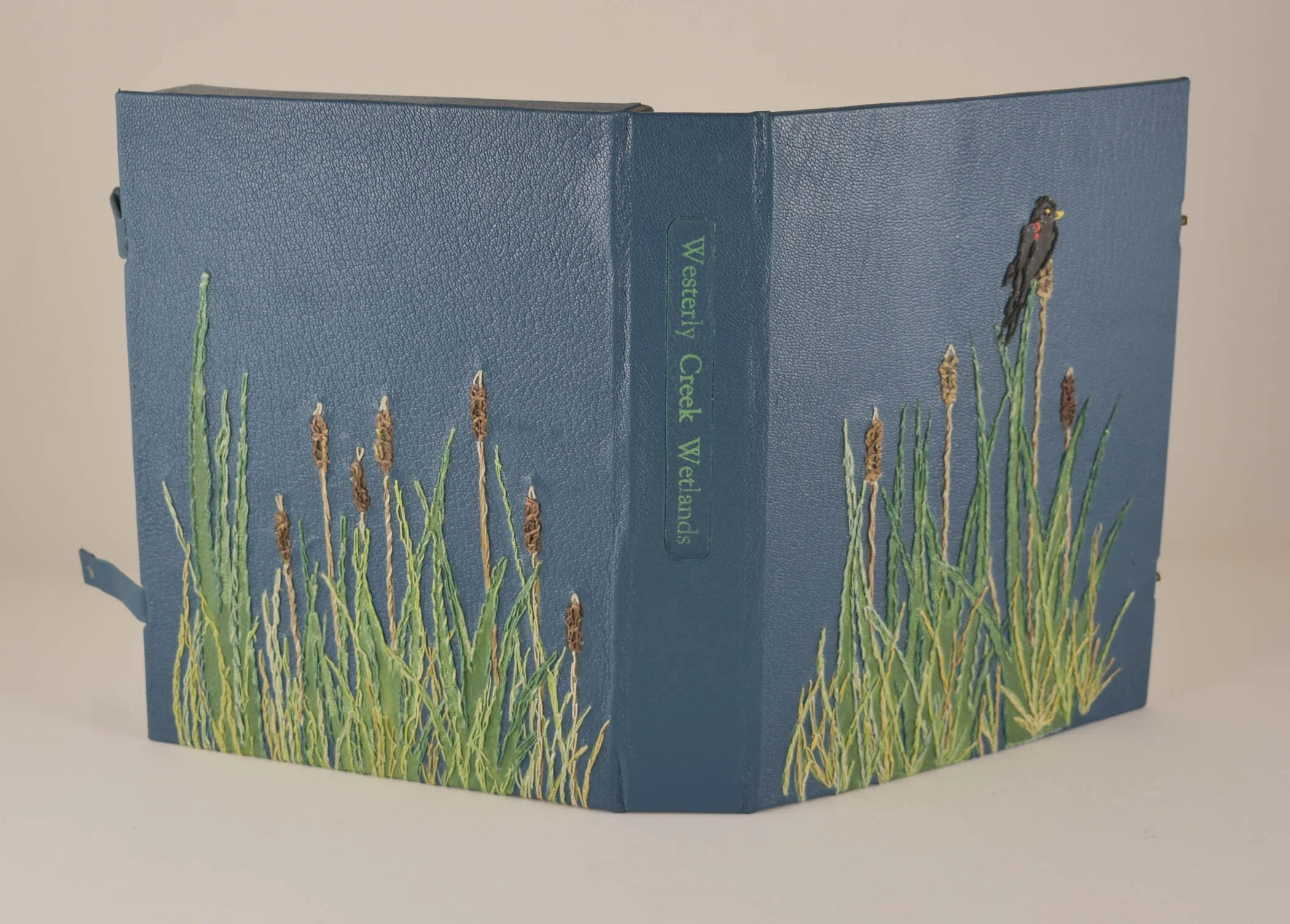 Image 1 of 6
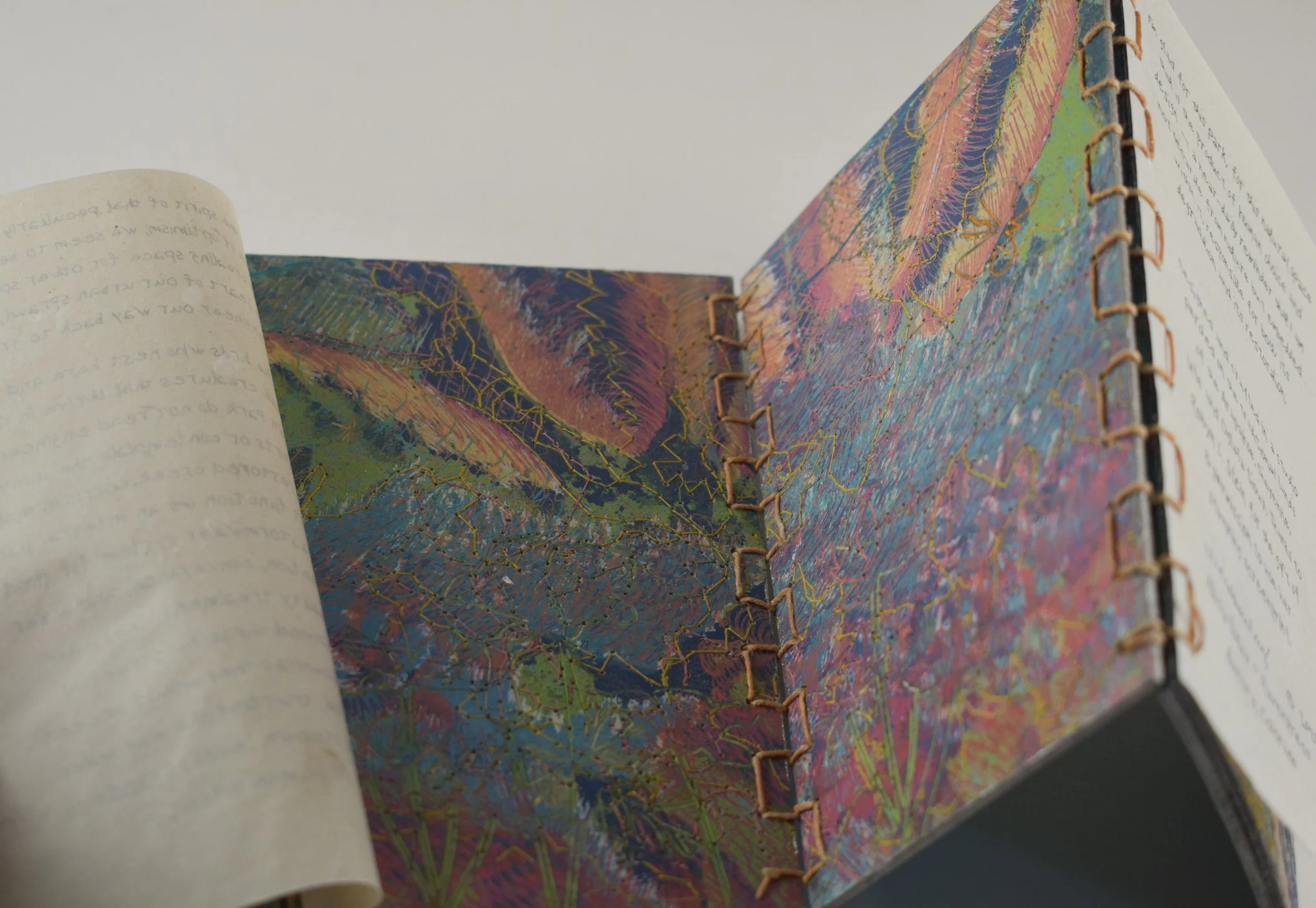 Image 2 of 6
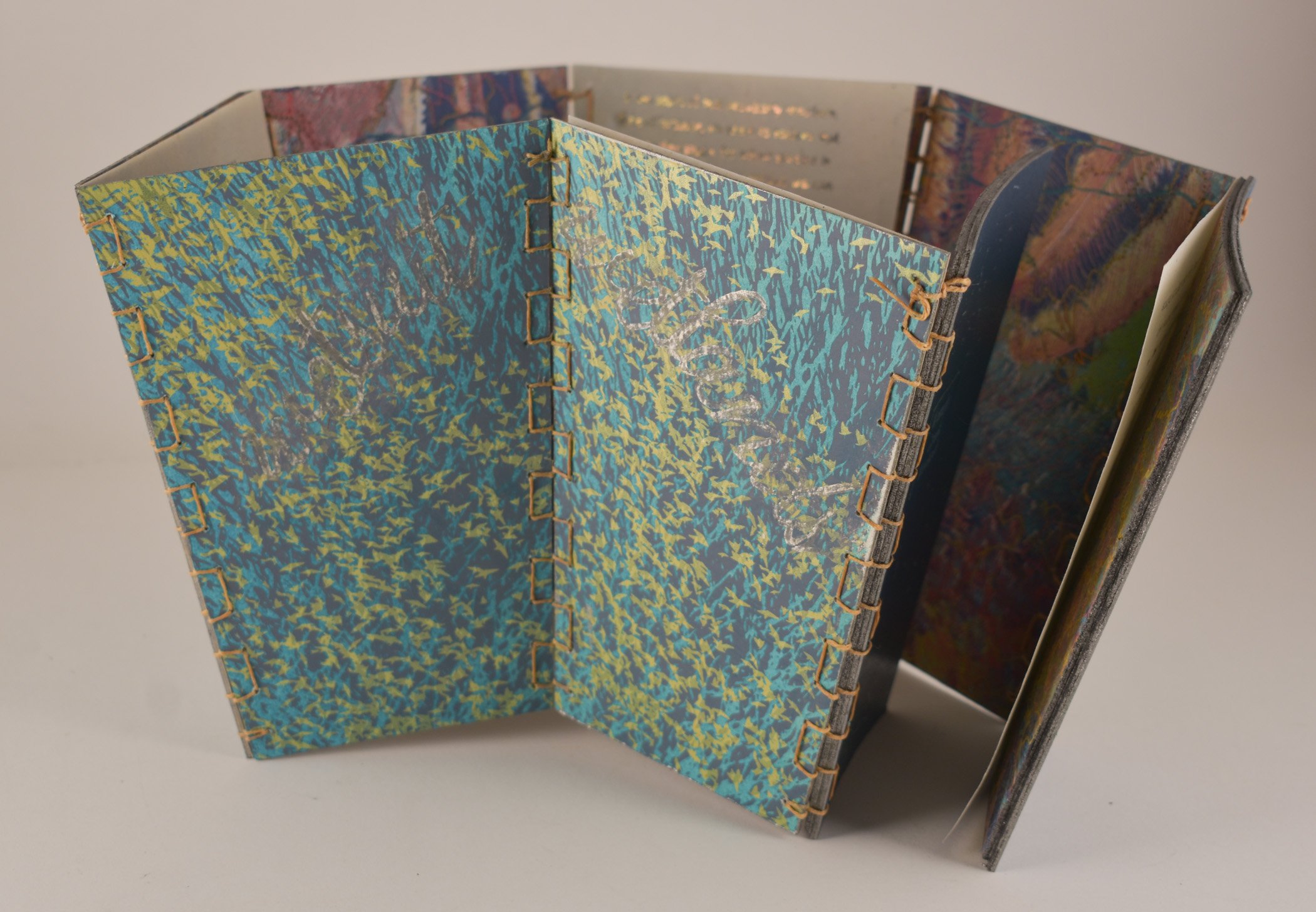 Image 3 of 6
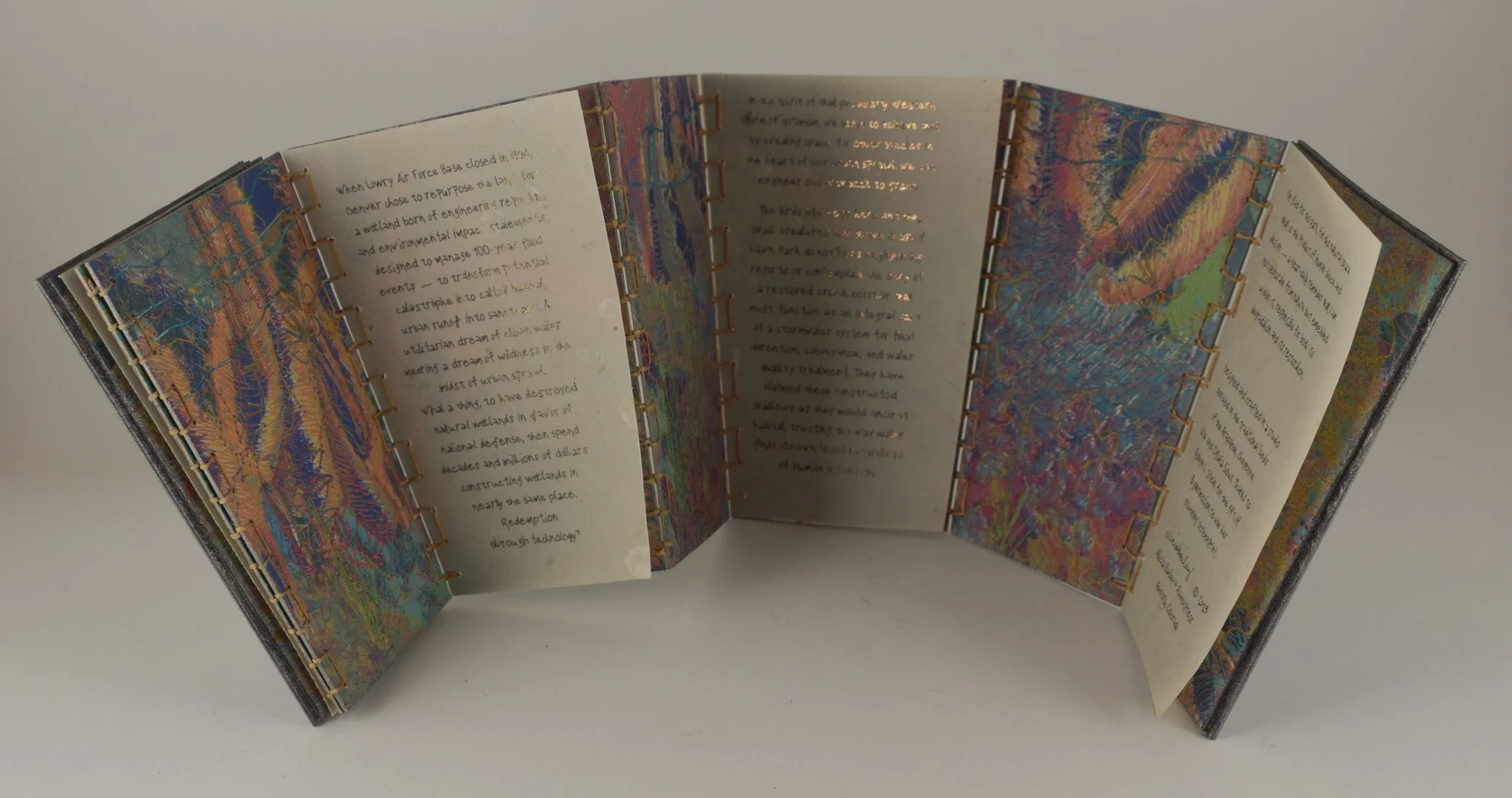 Image 4 of 6
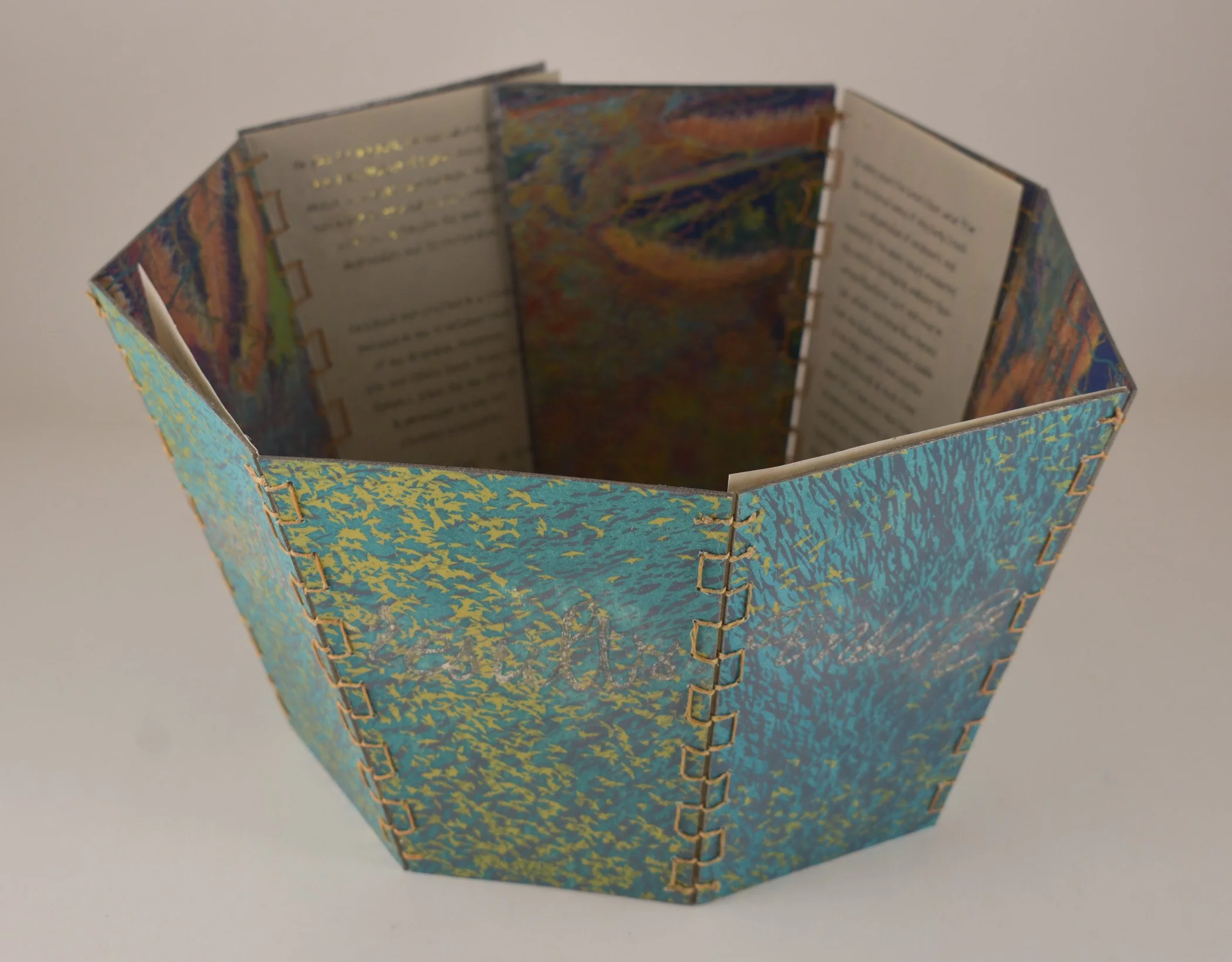 Image 5 of 6
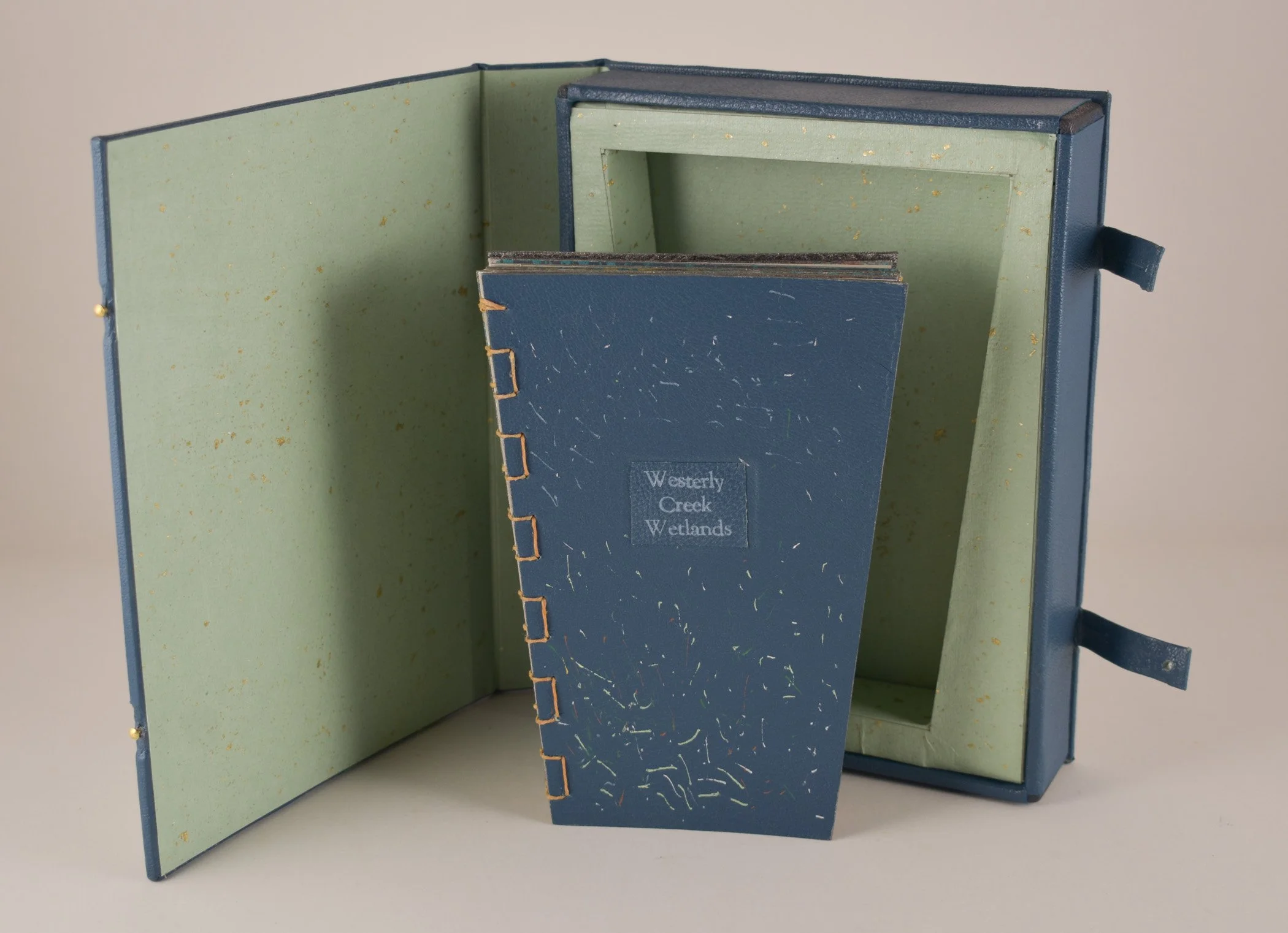 Image 6 of 6